La Catrina and the Day of the Dead
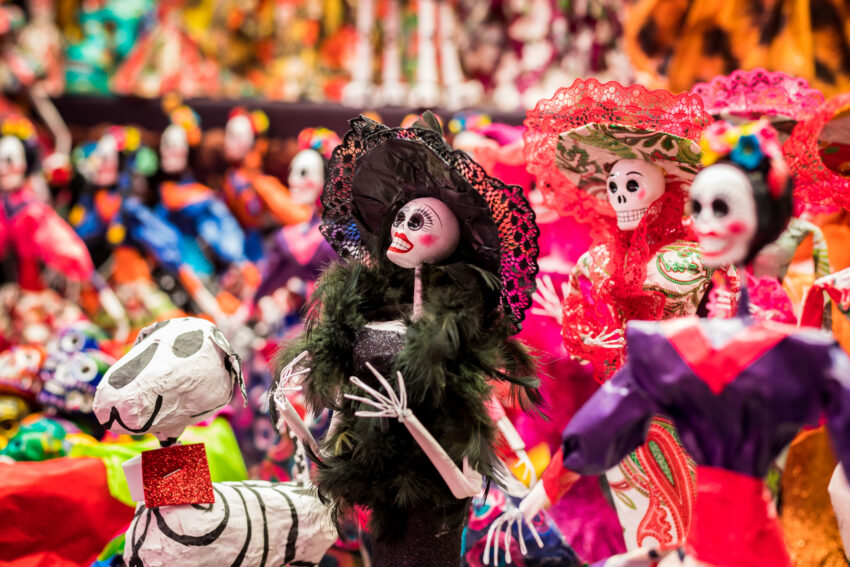

One of the most beautiful and highly anticipated times of the year for Mexicans is the Day of the Dead (Día de Muertos). While this season is primarily focused on remembering our ancestors, there is also room for joy and celebration. We celebrate death in order to celebrate life, for in doing so, we honor our own existence—a fleeting existence that will one day come to end for everyone, regardless of the social class to which they belonged. It is within this context that La Catrina emerges—one of the most iconic elements of this period, and perhaps the most internationally recognized.

What is a Catrina?
La Catrina is a representation of death with a distinctly Mexican flair. What might evoke horror or sadness in other parts of the world is portrayed here with beauty and elegance. The name is the feminine form of catrín—a term for an elegant person belonging to high society.
La Catrina can be depicted through drawings, engravings, murals, or three-dimensional figures. The most popular forms—even on an international scale—include papier-mâché sculptures and body art. She is typically portrayed as a skeleton dressed in elegant, colorful clothing, often wearing large hats or striking headpieces.
She should not be confused with calaveritas de azúcar (sugar skulls)—traditional sweets placed on ofrendas (altars), nor with the papier-mâché skeletons used for decoration. While both of those elements represent death as a transitional state, La Catrina is a character that embodies death as an entity in its own right.

The Birth of a Symbol
Although it may seem as though La Catrina has been a part of Mexican culture forever, her creation is relatively recent. Her origins date back to 1912, with a work titled “La Calavera Garbancera”. This engraving, by the artist José Guadalupe Posada, was created as a satire of the Mexican aristocracy. In this version, the depiction is simple: a skull wearing a formal, period-appropriate hat. In 1947, the artist Diego Rivera drew inspiration from earlier works to create his own version. The character La Catrina appears in his mural “Dream of a Sunday Afternoon in the Alameda Central”. It features a skeleton dressed in bourgeois attire, which served as the foundation for the figure as we know it today.

Variations and Meanings
The use of this figure in Day of the Dead celebrations became popular after the 1950s. Originally, she was depicted wearing elegant late 19th-century clothing; however, her attire has evolved over the years. Today, one might see catrinas in evening gowns, traditional regional costumes, or even outfits representing the pre-Hispanic era. Some versions feature modern clothing or a blend of styles, limited only by the creator’s imagination.
Although the figure originated as a critique of the bourgeoisie, its meaning has become more complex over time. It can signify respect for death, while also offering a humorous perspective on it. Many people associate the catrina with elegance; others find her beautiful or even somewhat sensual—but she is never intended to inspire fear or terror.
Nevertheless, the core meaning—as articulated by the master artist Posada—remains as relevant as ever:
“Death is democratic; in the end, whether fair-skinned or dark-skinned, rich or poor, everyone winds up a skeleton.”

Learn more…
- Visit the Diego Rivera Mural Museum in the heart of Mexico City, where you can see the original work featuring this character.
- Explore the Jamaica Market with a local guide. Immerse yourself in one of Mexico City’s most iconic markets, enjoy its culinary offerings, and witness the preparations for the Day of the Dead.
- Attend the catrina parade. Organized by cultural manager Jessica Esquivias in 2014 to strengthen Mexican identity and promote body art, it is different from the Day of the Dead parade that emerged in 2016 at the initiative of the Mexican government.
